"The Self Portrait with Nautilus Shell speaks of Dad... you can feel his energy looking at it," Allison said of her father.
It also speaks of James Yale, the scientist and the naturalist with his fascination with the nautilus shell and the counterclockwise spiral frequently found in nature called the golden ratio. This natural occurrence is also seen in sunflowers, in the pattern of leaves around a plant stem, the proportions of animal bodies, the structure of DNA, the swirl of tornadoes and hurricanes, and in our galaxy.
James, the artist, kept magnifying glasses on his desk, in his truck, by his easel as he looked deeply into the aspects of nature, staying true to the images he captures in his artwork.
Each week, along with YOU, I learn more about James Yale, the artist, where I am beginning to understand his visions of a composition followed by a meticulous study in the detail of capturing the proportions and light force of his subjects.
There’s one more lesson I am incorporating in the everyday miracles of my life that James leaves with me…to slow down and look deeper into nature as my meditation.
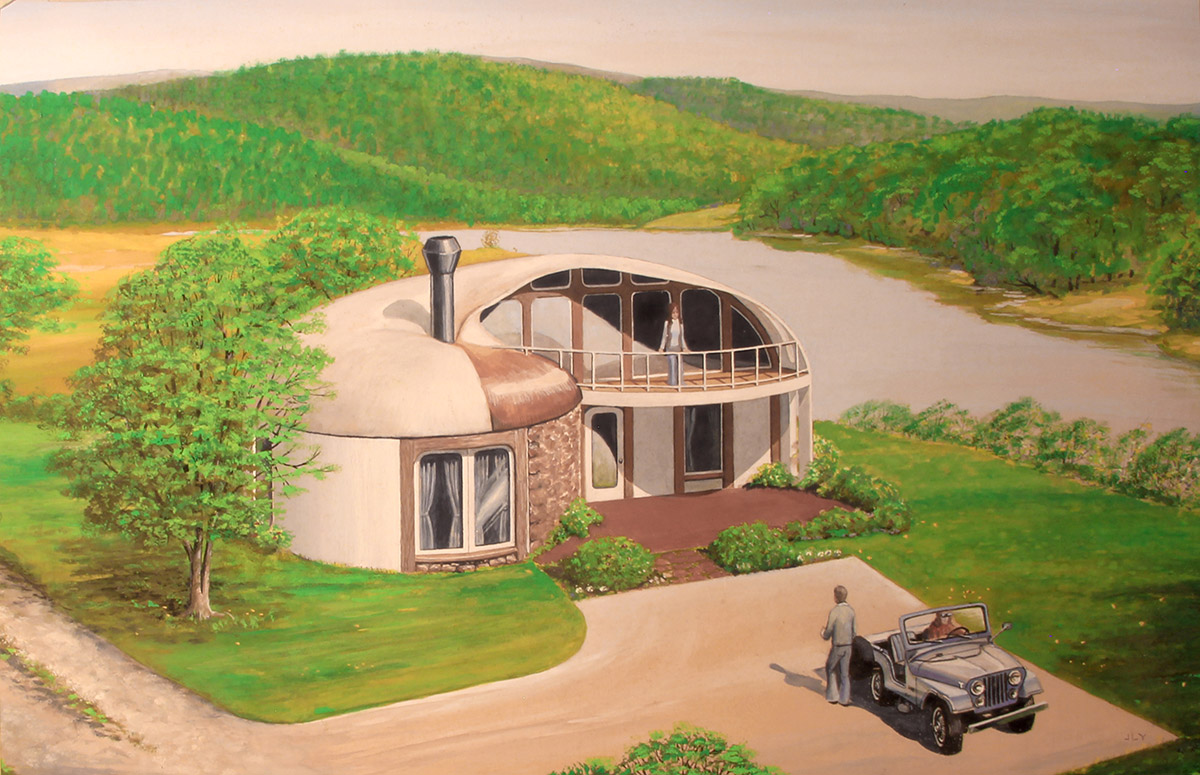
This week's surprise was the uncovering of the sketches of the Nautilus House that haven't been seen in over 40 years. These were preserved in scrolls, and I was honored to have the help and expertise of Matt Meers, Associate Professor of the Integrated Design Lab at NWACC, to safely unwrap the scrolls without damaging them.
-- Charlotte Buchanan Yale
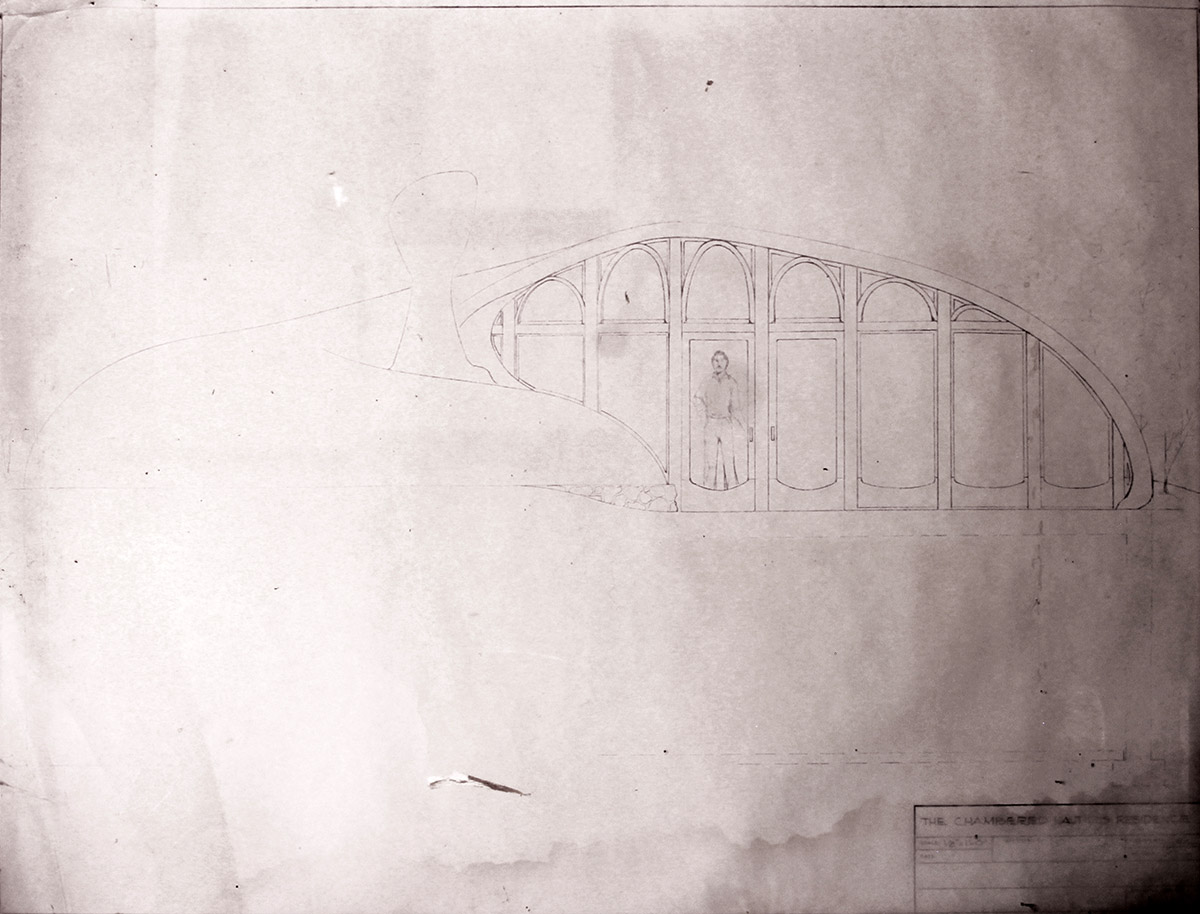
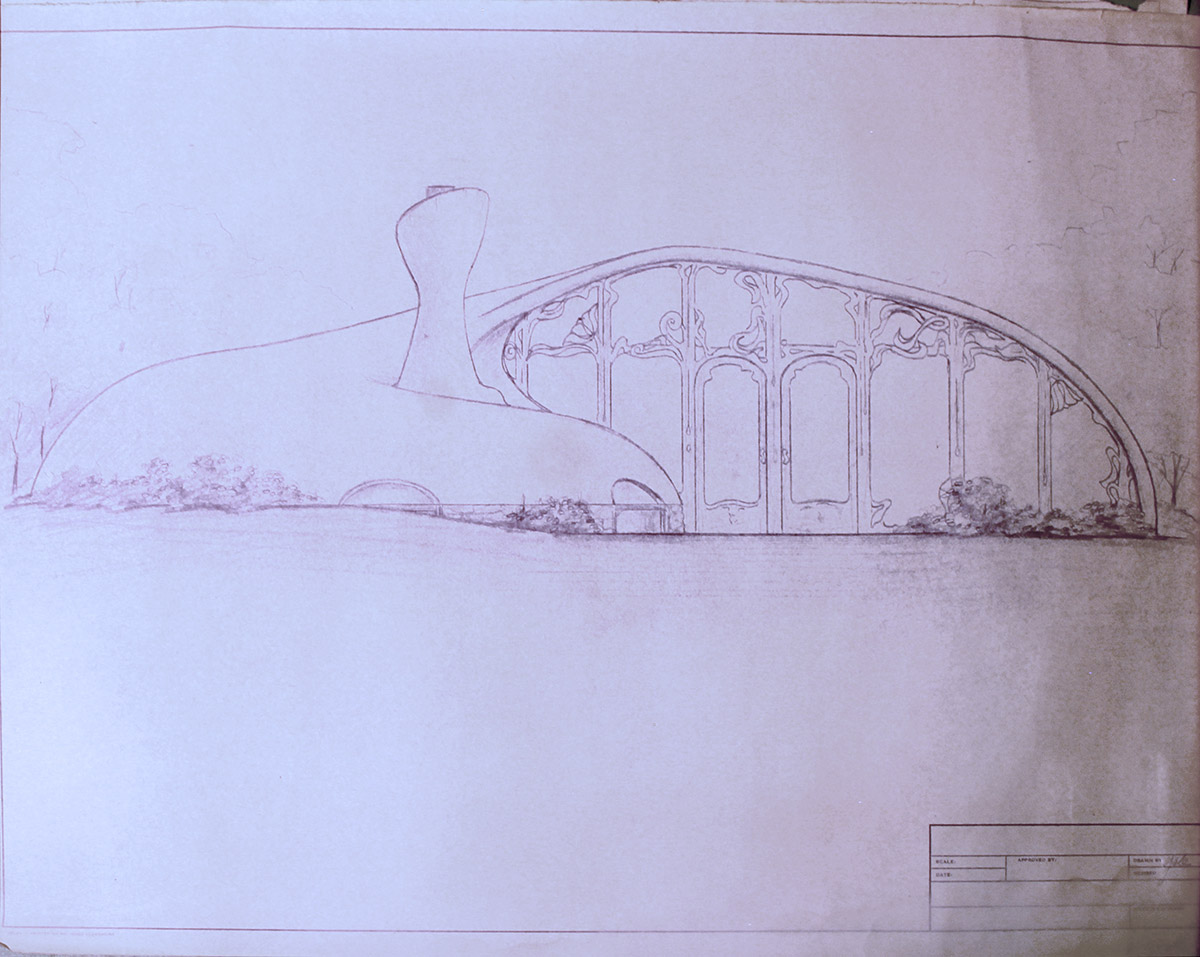
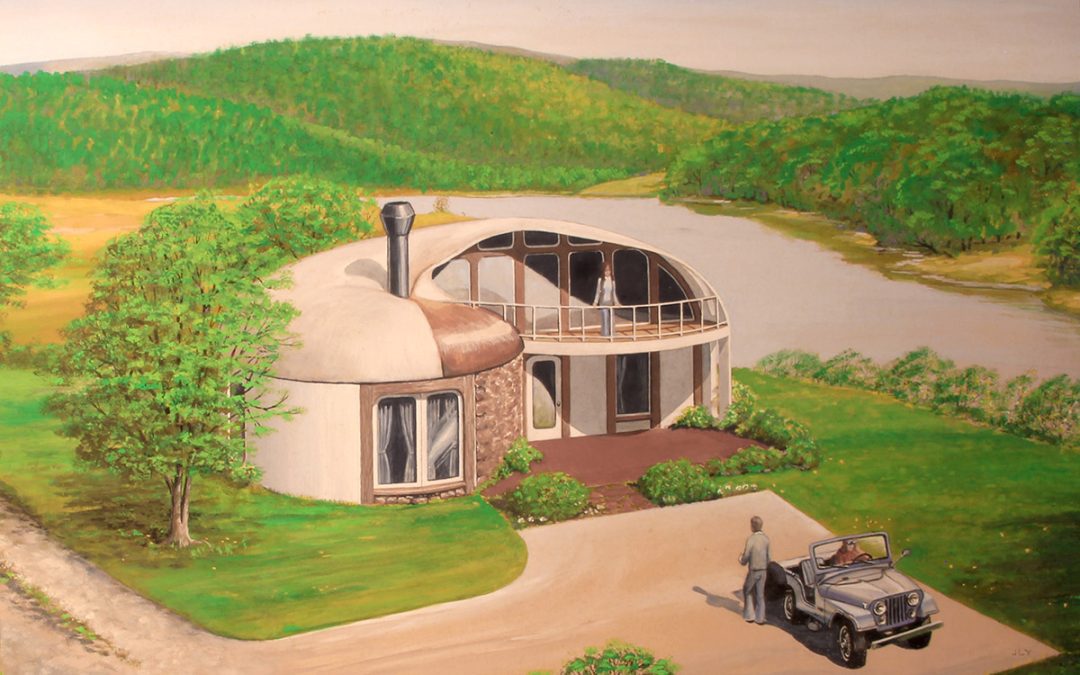
I arrived at James Yale's studio during a major crossroads in my life. While our paths included many potential intersections, I did not know James before he passed. I was looking for peace and renewal, but I found so much more. It's difficult to fully describe all that I have learned in the past four months, as I continue to find more depth, heart, professionalism, intellectual vigor and straight-up Magik in every new thing that I learn about his work and life. With my background in gallery, picture framing and museum collections,Charlotte asked me to help with a delicate scroll, labeled "Nautilus House" which was last unfurled 40 years ago. I also made digital copies of his color rendering of James' Nautilus House. I thought the framed rendering of the Nautilus House was a copy, but I was astounded to find that it was an original watercolor, or maybe gouache. James' command of a wide variety of media continues to impress me as I see masterful work in acrylic paint, watercolor, drawings and sculpture. I am drawn to his curiosity, playfulness of subject matter and the absolute seriousness of his craft. James was truly a Renaissance artist for the modern age.
In the first image of the preliminary front view, we are left with a ghost-like image of the chimney and shows the thought process of James' vision of a house that compliments nature's resilience and beauty. James' idea of a wall of windows develops over the course of later drawings, even to the final color rendering where he adds a lower story, making the nautilus shell the roof of a larger structure. We can easily see that the design is highly adaptable to terrain and climate. Each drawing shows us new possibilities. The Art Nouveau touches that he adds to the second drawing shows James' love for the compositions of growth.
Matt Meers
MFA-Sculpture
Associate Professor
Integrated Design Lab
NorthWest Arkansas Community College