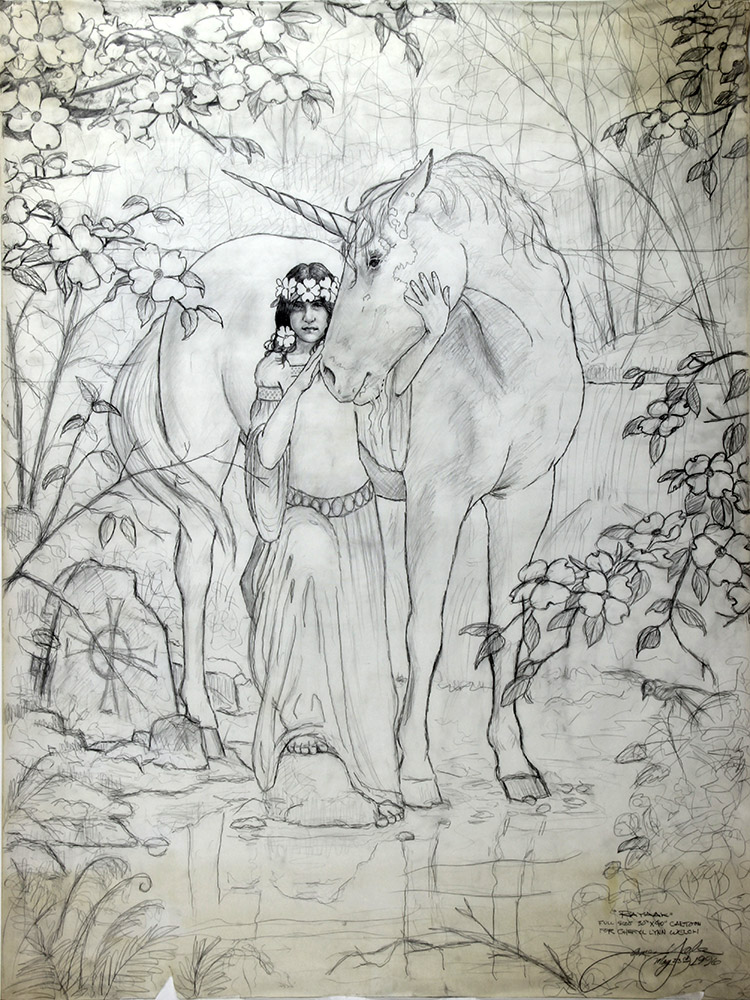
The Magic of Rayaak unfolds across time, starting as a waking vision from Cheryl Welch in 1996, and continues to be a catalyst for life, purpose and growth. When Cheryl sought out James to bring her vision to life, James believed his painting days were finished, stolen by the limitations of his advancing Multiple Sclerosis. James’ interest was reawakened once he learned of the source and imagery of Cheryl’s vision, giving him the purpose to start painting again. I imagine James felt like the Universe was tapping on his shoulder and whispering in his ear, “You’re not done, there is more to discover and reveal”
A few weeks ago, Charlotte welcomed Cheryl Welch to the house with the original Rayaak painting to photograph and record the story of James’s artistic rebirth. I raced to the house after teaching my drawing class at NWACC to photograph the painting while the sun was cooperating. I captured enough images to document every detail of this complex and pivotal work…at least, I thought I did. I went to load the memory card on my computer to see the results, only to find the memory card already on the desk, not in the camera, and not full of the pictures of Rayaak which was already driving away. Cheryl invited us to breakfast at the hotel where she stayed to give me one more chance to document the painting before driving three-hours away.
A few days later, Charlotte pulled a few of James' scrolls out from a hidey-hole behind the door, one of many random storage nooks throughout the house. Charlotte and I occasionally pull a few of his rolled up drawings, which we refer to as “scrolls” which match their historical look and feel, I'll then photograph them to create a digital archive and analysis of each work.
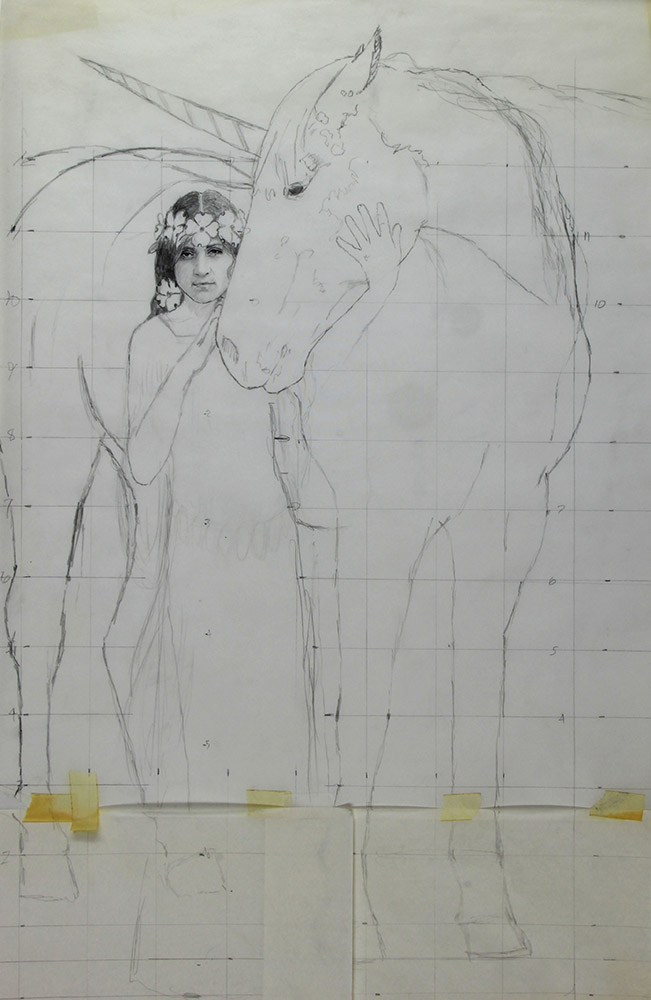
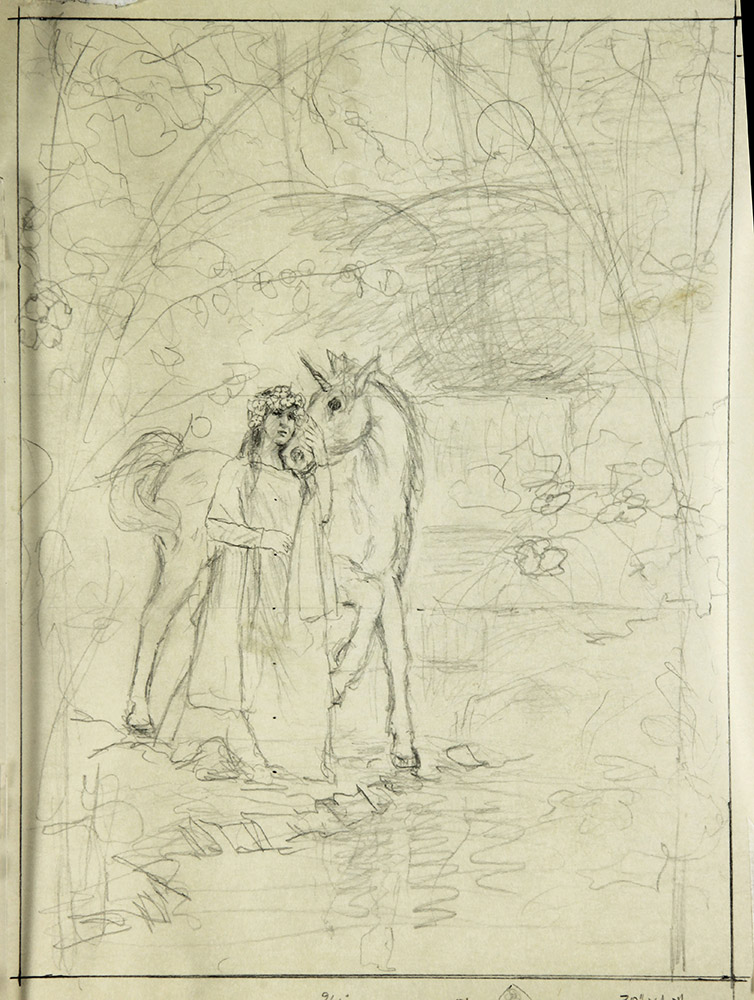
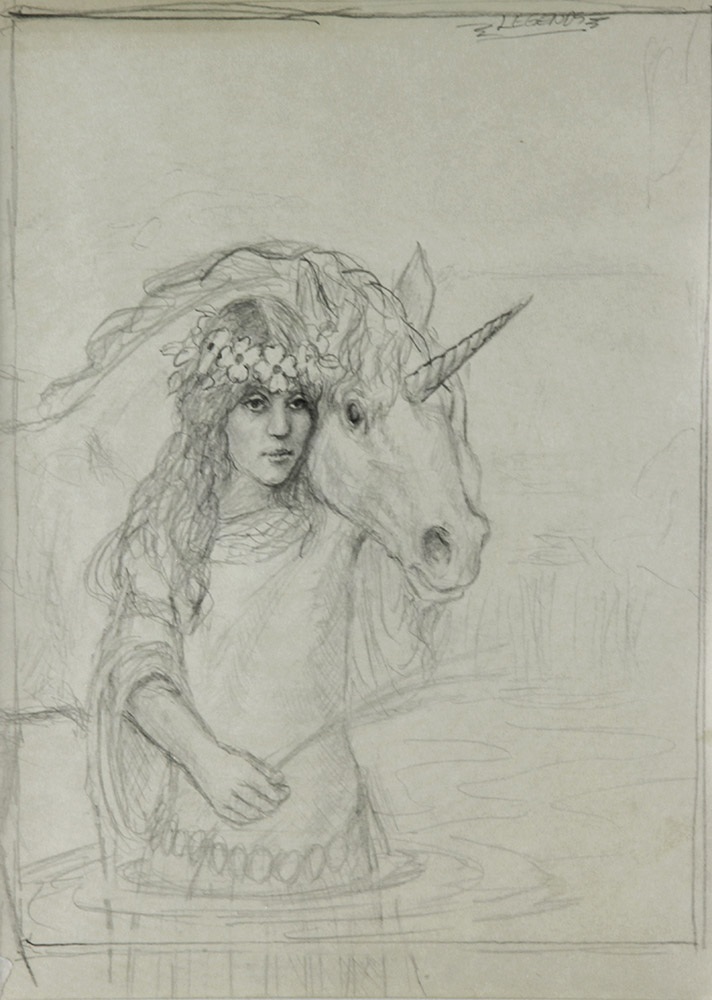
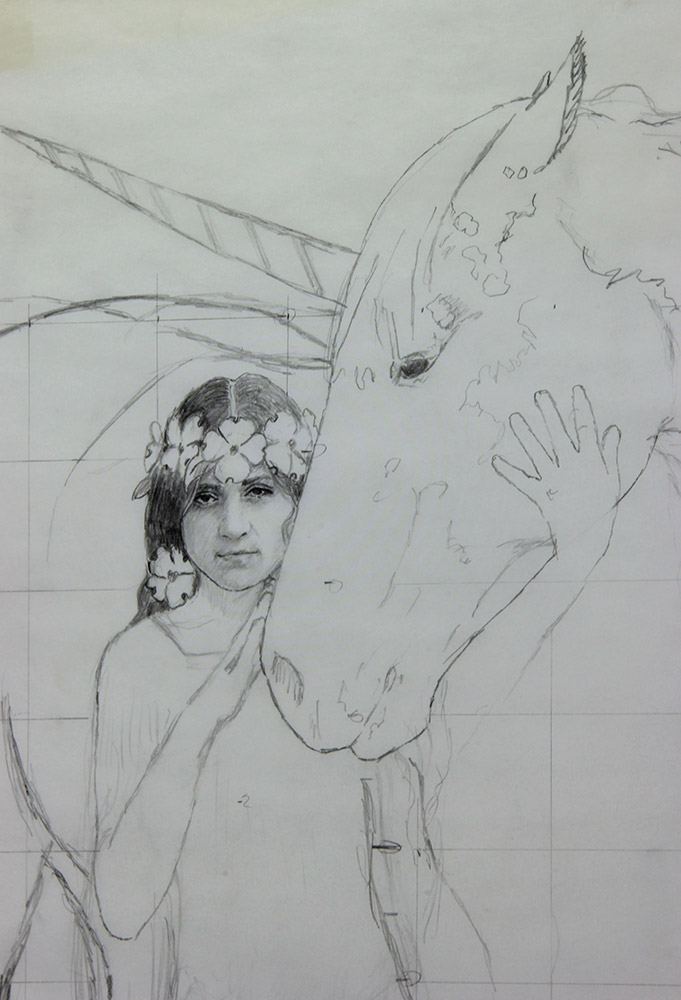
That day we pulled down a scroll labeled, “Cheryl Welch Commission Rayaak 1996”. How was Charlotte directed to that exact scroll, from that location, on that day? The Magic of Rayaak continues to unfold 30 years later (with the following rediscovered seven original working drawings).
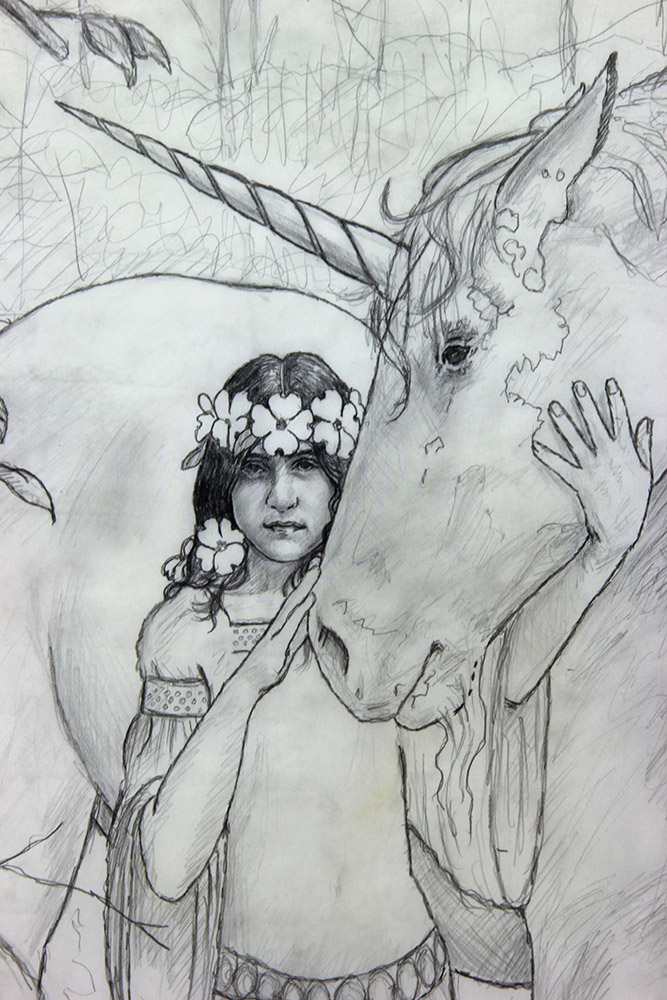
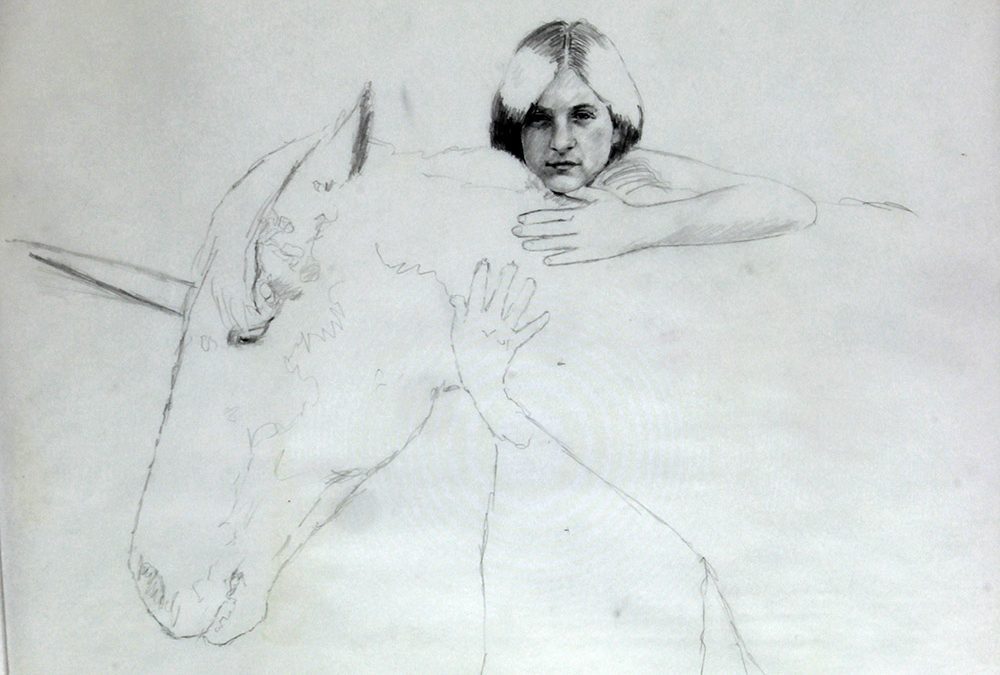
Back in James’ studio where I work, I set up the lights, camera tripod and backdrop. As I carefully roll out the time-hardened drafting paper, I notice other sheets inside, a lamination of ideas hiding, waiting to meet me. The largest drawing is a final draft of the composition with the details of the woman's face and unicorn worked out in practiced grace. As the layers separate from one another, I find smaller studies of the woman's face and the anatomy of the horse, but also experiments of arrangement and scale between the figure and the unicorn. Further in, I found even smaller sketchbook-sized drawings which showed the beginning of his ideas in trying to find the vision of Rayaak in its present form. There was something about the earliest drawing that made me understand the difficulty of James’ path back into painting, almost out of spite for his physical challenges. There is a simple almost innocent quality to the early drawings that feel like a slow awakening, a remembering of muscle memory that was slow to take hold. As James’ exploration evolved in larger drawings, you can see the confidence, the focus and the excitement that came through the process of making a vision manifest into visual life. The early drawings are almost cartoonish, but were used to work out a variety of possible layouts for the elements given to him by Cheryl's vision. The larger drawing reveals his skill and attuned eye for capturing the human spirit, the spark of life that draws him to paint the human figure into most of his works. I was especially struck by one drawing of just the woman's face and a simple contour drawing of the unicorn.
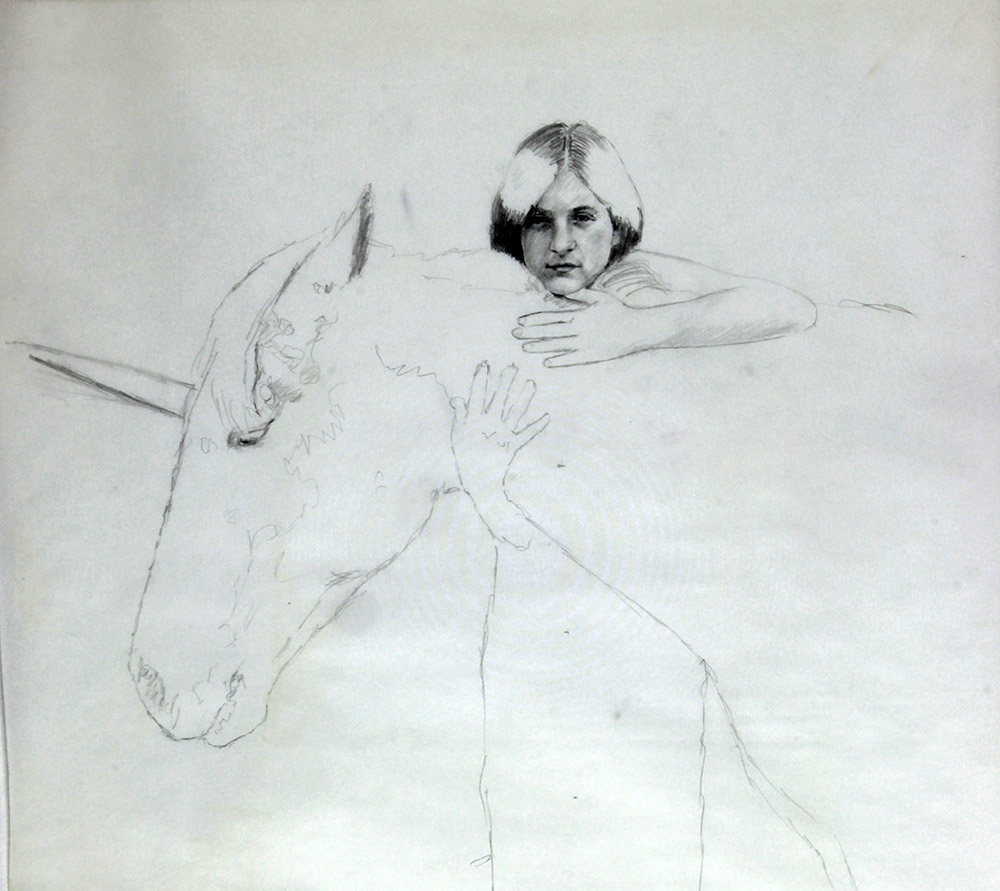
I felt like I was in conversation with James, as an art lesson and as a mentor sharing his struggles and successes. The more I discover his work and his archive, the better I understand the deep discipline, scientific focus and strength of heart that went into each of his works. Integrity, respect and love comes through each of his artworks.
I am grateful to witness the reveal of this artwork, this process and the story that stitches so many people together across time.
Matt Meers
Archivist and Curator of the James Yale Legacy Project